Labels

Classwork - A Level Media Studies

 This blog post, written by me (Beatrice), details the resources of the materials I studied in class and outside of class that will be beneficial for our music video project. This will include the technical elements, theories, and additional information regarding media studies.

TECHNICAL ELEMENTS

Camera Angles and Movements
Camera angles and movements are essential for visual storytelling, as it helps to shape how audience perceive the scenes, emotions, and theme of the narrative in a music video.


Camera angle is a specific view point from which a camera captures the subject or scene. This will impact how the audience interprets it. (e.g., higher camera angle makes the subject appears small / weak). It also influences the mise-en-scène, which guides the audiences' perspective and response to what is shown in the scenes. 

Here is the list of some camera angles that I've studied, along with the image of the notes I took in class : 


Effects 


Close-ups : focusing on a specific part of the subject / object in detail, used to intensify emotions and highlight details.


Extreme close-up : an even tighter version of close-up, focusing on very small details. It intensifies atmosphere and draw audiences' attention to details.


Medium shot : frames subject from the waist up, providing a balance between detail and context, as it offers a balanced view of the subject while still allowing some context or background to be visible.


Long shot : shows the subject from a distance, with the full body of the person visible but still focused on them within their surroundings. (noticeable environments, but the subject remains as the key focus)


Extreme long shot : the subject appears to be very small within the large environment, used to emphasize the vastness of the surroundings. (focuses more to the setting than subject)


High angle : the camera is placed above the subject, facing downwards. It makes the subject appear small, vulnerable, or powerless. 


Low angle : the camera is placed below the subject, facing upwards. It makes the subject appear large, powerful, or dominant.


Dutch angle : tilted sideways to create feelings of disorientation and imbalance. It can also create a surreal atmosphere.


POV : shows the scene from a character's perspective, making audiences see what the character would see if they were in the scenes themselves. It creates a sense of emotional engagement and immersion, as it allows audiences to experience the narrative firsthand.


Over the shoulder : positioned behind a character, slightly showing their back or shoulder. It gives the audience a sense of being part of the scene, as it typically focus on what they're looking at. 


Cowboy shot : frames the subject from the knees up to the head, often capturing action or preparation for intense moments. Often used to emphasize on confidence and power, as it highlights both the character's body and environment.


Establishing shot : serves to set the context of the environment, typically shown at the beginning of a scene. It provides clear understanding of where the action is taking place, as it establishes the location, mood, and relationship between characters or their surroundings.

Camera movement is the intentional movement of a camera during a shot to influence audiences' engagement with a subject and enhances the narrative. It also shapes how the audience interprets the visual content. 

Effects
Static : staying still, making the scene feels calm, peace, and normal.
Pan : moves horizontally, revealing information while mirroring the natural head movement of the audience.
Tilt : same as pan, except, it moves vertically.
Push in : moves closer to the subject, making the audience more involved and getting more serious. 
Pull out : moves further from the subject to detach from it.
Zoom in / out : using camera lens to get closer / further away from the subject. It draws our attention to it.
Tracking : following the subject from behind.
Trucking : following the subject from the side.
Boom : moves up and down, usually uses drones, cane or helicopter for the shot.
Crane : reveals the epic size of the setting / landscape.
Random : it gives a , raw, high energy, and natural feel to it, as it is usually shakey / handheld.

Mise-en-Scène
Mise-en-scène is every visual elements that appear in front of the camera and contribute to the overall look, feel, and meaning of the scene. It shapes the audiences' interpretation of characters, themes, and atmosphere. This is essential for encoding meaning, as it helps to communicate the themes and emotions visually. Additionally, each of these elements contributes to the preferred reading by shaping audiences' understanding without relying on dialogue.


The list above was made by my teacher, Mr. Nick.

Some mostly used mise-en-scène includes : 
Props : objects that the subjects interact with within the setting. It can be symbolic or functional.
Setting : physical location / environment where the scene takes place (can be realistic or stylized). It immediately informs the audiences about the context and time.
Costume, hair, and makeup : define subject's appearance. It helps to establish personality, social status, time period, or emotional state. 
Colour : contributes to the emotional feel of the scene, usually by colour grading and colour temperature (e.g., warm tone connote feelings of happiness and comfort, while cool tone connote feelings of sadness and melancholy).
Lighting : sets the mood and tone of the scene. (e.g., high-key lighting are often used in lighthearted scenes, while low-key lighting are often used in thriller scenes) 

Sound
Sound includes all audio element within a media text, such as music videos (the project that my team and I are currently working on), films, and television. It plays an important role in evoking emotions and creating the atmosphere. Sounds are categorized into three; diegetic, non-diegetic, and trans-diegetic. 


Diegetic sounds are sounds that can be heard by characters within the media text. It is used to add a sense of realism and immersion, revealing information to characters, then the audience.
Examples : footsteps, rain, voices.

This was also made by Mr. Nick.

Non-diegetic sounds are sounds that can only be heard by the audience. It enhances meaning, creating an emotional response in the audience. 
Examples : sound track, sound effects.

Trans-diegetic sounds are sounds that transitions from one to the other. It creates a link between the audience and world, making it more immersive.

Edit
Editing is the process of selecting, arranging, and manipulating footage to create a cohesive and engaging narrative. It is an important part of the post-production process, as it shapes the pacing and overall flow of the scene. The two main types of edits are continuity and non-continuity. 


Here is the note I created regarding editing, which outlines the different types of edits, brief descriptions of each, and short explanations of how they are used in media production ↓ 


THEORIES

Media theories are frameworks developed by theorists to understand, analyze, and explain how media texts influence and are interpreted by audiences. It reveals how different elements contributes to shape the meaning and social effects of media.

Although we've learned quite a lot of theories in media studies,
Here are some theories that are often used in this project : 

Uses and Gratification Theory - Blumler and Katz
Based on this theory, it is assumed that audiences actively choose media content to fulfill specific needs such as :


This theory makes us consider what audiences will seek in our music video and how our video will fulfill these expectations. 

Theory of Stardom - Richard Dyer
This theory focuses on the concept of stardom and how stars are constructed through the media. He believes that stars are constructed to represent 'real people' with real emotions, allowing audiences to connect with them and promote their products. Additionally, he argues that their personality is often crafted and influenced by the media, producers, and public relations. This theory makes us think about how we will present our star in our music video, the type of image and persona we're constructing, and how it ties into their broader public image. We can also use this theory by exploring their 'real' and 'reel' persona in both the music video and social media. 

Here is the link to the classwork my team and I have created regarding this theory  Classwork ; Theory of Stardom

Identity Theory - David Gauntlett
According to this theory, he suggests that media provides audiences with resources to construct their personal and social identities. People use media to understand who they are, what they value, and how they fit into the world. He also argues that in the past, media offered fixed representations of identity (such as rigid gender roles or stereotypes), but in modern media, audiences are given more diverse representations. This theory is useful, as it helps me understand how music videos can represent identity through narrative, visual, and characters. 

Representation Theory - Stuart Hall
Stuart Hall argued that "Media doesn't reflect meaning, media creates meaning". This theory explores how media represents social groups, identities, and issues. He argued that representations is not just about reflecting reality, but also about constructing the meaning of it through language, visuals, and cultural symbols. He also argued that events/people/groups don't have fixed meanings; instead, the media actively shapes and assigns meaning to them after they occur.


This theory is useful to analyze how social identities (such as race, gender, class) are portrayed in music videos, as music videos are where different individuals or groups are represented in various ways. It often use visual codes and symbols that either conform or subvert stereotypes.

Genre Theory - Steve Neale
'Similarity and Difference' ; the idea of this theory where Steve Neale stated that "A text must be similar enough to be recognize as a particular genre but also be different enough to be new and exciting". This theory explores the ways genres are constructed and evolve over time. This helps me to understand how audiences identify with certain conventions and expectations of a particular genre and how these genres can be conformed or subverted through media texts. 


This theory will be useful, as it will help to shape the overall style and message for our music video project while engaging with the expectations of our audiences.


TERMINOLOGIES
Genres
Genre is the categorization of different types of media content based on their shared conventions, themes, and styles. It helps audiences and what to expect from a particular media text. By understanding genres, it helps me to analyze and deconstruct media texts, which allows me to  identify the specific elements that define them. 
  • Sub genre is a more specific category within a genre. It usually shares core elements of the broader genre but it has its own unique features to it. 
  • Hybrid genre is a mix of two or more genres / sub-genres. It blends the characteristics from different genres to create something more unique, which makes it appeal to a broader, or more specific audience. This allows audiences who typically enjoy one genre to explore others they may not usually consider, thus attracting a wider range of audience. In music videos, this type of genres are surprisingly common, as artists often experiment with various visual and musical styles to create innovative and engaging content.

Conventions
Conventions expected patterns and practices that a particular genre, or media type follows. These help audiences identify the genre or type of media they are engaging with, as they are familiar and often predictable. They act as a standard for how media texts are structured and presented.
  • Conform : Conforming means to follow established conventions, norms, and expectations within a certain genre, narrative structure, or media type. When a media text conforms, it follows the typical patterns or codes that are commonly recognized by the audience to make it predictable or familiar. Furthermore, it often serves to meet the expectations of the audience and ensure familiarity, which helps build a connection with the audience, as they know what they’re going to experience based on the genre.
  • Subvert : Subversion refers to the act of challenging or reversing traditional expectations, conventions, or norms, essentially the opposite of conforming. It occurs when a media text deliberately breaks away from the standard codes and conventions typically associated with a particular genre. Subversion is often used to create surprise, critique social norms, or make a statement. Additionally, it helps to distinguish a work from others within the same genre and challenges the audience's expectations, which encourages them to reflect on the content in a deeper way.

ADDITIONAL INFORMATIONS

Storyboard
A storyboard is a visual representation that consists of a series of sketches that represents the key scenes of a music video or other media texts, and are arranged in the order they will appeal. It is used to plan and visualize the order of events to ensure that the narrative, camera angles, and other aspects are well thought out. Furthermore, it ensures that all visual components of our music video are planned and coordinated in advance, which will make the production process smoother and more efficient.

Here is the example of a storyboard made by Mr. Nick, along with my notes below it 

Storyboard's Key Elements :
- Frames : shows key moments, movements, and transitions.
- Shot number : orders of each scene.
- Shot duration : the amount of time each shot would take.
- Camera directions : how the shot would be captured through camera angles and movements.
- Transitions : shows the edit / cut type after each scenes.
- Shot descriptions : a short description of the action happening within the shot.

Here are some examples of the storyboards I created for various class projects we've completed : 


This is a storyboard I created for an ad promoting Miss Dior’s Eau de Parfum 2021. As shown above, it includes detailed descriptions of all the key elements I envisioned using. 


The storyboard above is another one I created. This time, it's for a documentary project we completed prior to this one. Unlike the previous storyboard, this one is less detailed and lacks written descriptions, as I felt the drawings alone effectively conveyed the necessary elements. Additionally, we had a script with detailed scene numbers that I followed thoroughly, so adding more details to the storyboard didn’t seem necessary.
 
Clapperboard
Clapperboard is a tool used in video production to assist with organizing shots and syncing audio and video during the filming process. I think this will be very useful during the post-production phase, as it allows editors to easily identify the footage that corresponds to the intended shot. Moreover, it helps the editor to know which scene they should work with.

Multi-cam Editing
Multi-cam editing is the process of combining footage from multiple cameras, each capturing different camera angles, into a single sequence. Our teacher introduced this technique to us, as he believed it would enhance the overall visual quality of our music video. I am interested in using this technique to our project, as I find it highly beneficial in making the final product appear more dynamic and visually diverse. In my opinion, by presenting the narrative from multiple points of view, multi-cam editing could help prevent the music video from feeling repetitive or monotonous. However, I am unsure if we will be able to implement this technique, as our team only consists of three members, with my two other teammates acting as the stars in the video.

The result of our multi-cam editing is shared through this blog post → Multi-cam Editing Blog Post

Colour Theory 
Colour theory is the study of how different colours work together to create a visually appealing and balanced result. It also acts as a set of guidelines used by designers, filmmakers, and media producers to convey meaning and evoke specific emotions through the use of colour. In media products like music videos and digipaks, colours are carefully selected to create mood,  influence audience’s emotional response, and highlight certain themes. 
  • Warm colours such as red, orange, and yellow often connote warmth, happiness, and passion. However, it can also connote danger depending on the context. 
  • Cool colours such as blue, green, and purple tend to connote fresh, relaxation, calmness, and peace. However it can also connote sadness and isolation at times.
Saturation also plays an important role in shaping the mood. Often times, images with desaturated / muted colours connotes feelings of nostalgia, while also creating a sense of melancholy or somber. In contrast, high saturation tends to create a more energetic and lively atmosphere, which can evoke feelings of excitement and positivity. This will encourage the audience to align with the preferred reading, as suggested by Stuart Hall's Reception theory

Below are examples of two images placed side by side, each using a different colour approach ↓


This research has helped me develop a clearer understanding of how colours can influence audience perception. I applied this knowledge when selecting the visual style for our media products (music video, digipak, and social media). This ensures that the colours I chose will reflect the intended mood and themes for each product. 

Typography
Typography is the style, appearance, and arrangement of text to make it clear and visually appealing for readers. It involves choices such as font type (serif, san-serif, etc), weight (bold, thin, light), size, spacing, and alignment. This is important when creating a media product, as it helps to communicate meaning beyond the words themselves. Producers use typography to direct audience's attention, establosh brand identity, and reinforce certain mood or genre of the product they're making. Moreover, consistent typography choices can strengthen the star's brand identity, as it makes it easier for audiences to recognize the star.

Fonts
Fonts are a crucial part of typography, as they refer to the style and design of text in any media product. Fonts can help to shape the meaning of the text and guide how audience perceive them, so they will follow the producer's preferred meaning. 
  • Bold and sharp fonts usually connotes seriousness or strength.
  • Light and thin fonts connotes elegance and simplicity.
Below are examples of how different fonts can create different moods. ↓


Apricots : Handwritten, brush-style script font. 
This font creates a sense of authenticity and closeness. Fonts like this are tipically associated with indie music, romance, and lifestyle, as they mimic the personal and informal feel of handwriting. When it's applied to a music video or digipak, it often suggests themes related to personal stories, relationships, or nostalgia, as it helps to  establish a more intimate connection with the audience.

The Seasons : Classical, formal-looking font.
This is a type of serif font. Since it looks formal, serif fonts are tipically linked to timelessness, elegance, as it suggests a more poetic and sophisticated tone. The refined and structured appearance makes it suitable for media products that aims for an artistic or literary aesthetic.

Poppins Bold : Clean, modern font.
This is a type of sans-serif font with strong visual weight. The bold structure looks confident and direct, which allows the text to stand out easily and attract audience's attention. Sans-serif fonts like this are often associated with contemporary design and are often used in social media platforms and digital branding. This type of font is effective for products targeted at younger audience, as it connotes simplicity and modernity. 

Reflection : Although creating this blog was time-consuming, particularly as I had to revisit certain aspects of my research, I believe it will be highly beneficial in the long run since I can easily refer back to it if I need to recall specific information or want a quick reference. Additionally, it helps me to review and strengthen the classwork I have completed, which enables me to refresh my memory on topics I may have almost forgotten. Overall, I enjoyed working on this blog, although I didn’t anticipate the amount of time I would spend on it.

Song Research

 This blog post, (written by Jasmine), outlines the research and analysis of the song we choose for our project, 'BIRDS OF A FEATHER', by Billie Eilish (2024). It includes the song's message, our reason for selecting it, the initial concept for we envision for the music video, and how our execution will differ from the original music video.

General song background and message:

Based on several websites discussing the meaning of this song, here is the overall intended message:

This song was originally intended to be a love song. This song leans towards the common theme of being willing to die for a lover or loving them until death, according to Finneas, the artist's producer and brother. Although, compared to the usual passionate love conveyed in songs, this song was meant to be more about a toxic relationship where one partner would love-bomb another (meaning to shower a partner with love, gifts, and affection and then just stop and leave them hanging after a while, this is a common manipulation tactic in relationships). 

In the second verse, it can also be noted that this song also discusses themes such as insecurity. This verse describes how it is to really love someone, making them look amazing through your eyes and wanting them to know or see themselves through your eyes too. To further add to this, this verse also mentions that a partner not being able to see how amazing they are almost seems like a bit or a joke.

However, after listening to the song, many listeners strayed from this message and instead interpreted and derived many different connotations from this song's lyrics. Learning this, Billie Eilish herself has encouraged this and is accepting towards different interpretations of the song's message. 

In the end of all of this, this song is mainly about persisting through the challenges faced during relationships and the pain that comes with persisting in a toxic relationship. This song doesn’t only convey negative emotions, however it paints a more complex picture of feelings and shows that toxic relationships are not always filled with unhealthy feelings, but also sweet moments. This can often make it hard for people to pull away from their toxic partners.

Why we chose this song:
We chose this song mainly because we wanted to make a music video surrounding friendship. Although that isn't the intended underlying meaning to the song, we realized that by using this song, we could be able to interpret and send our message through the song. Although it is a love song, due to the nature of the lyrics, we are able to relate it to deep relationships between friends. This is also a popular interpretation of the song on social media platforms such as Tik-Tok who have popularized this song by making friendship based content with it.
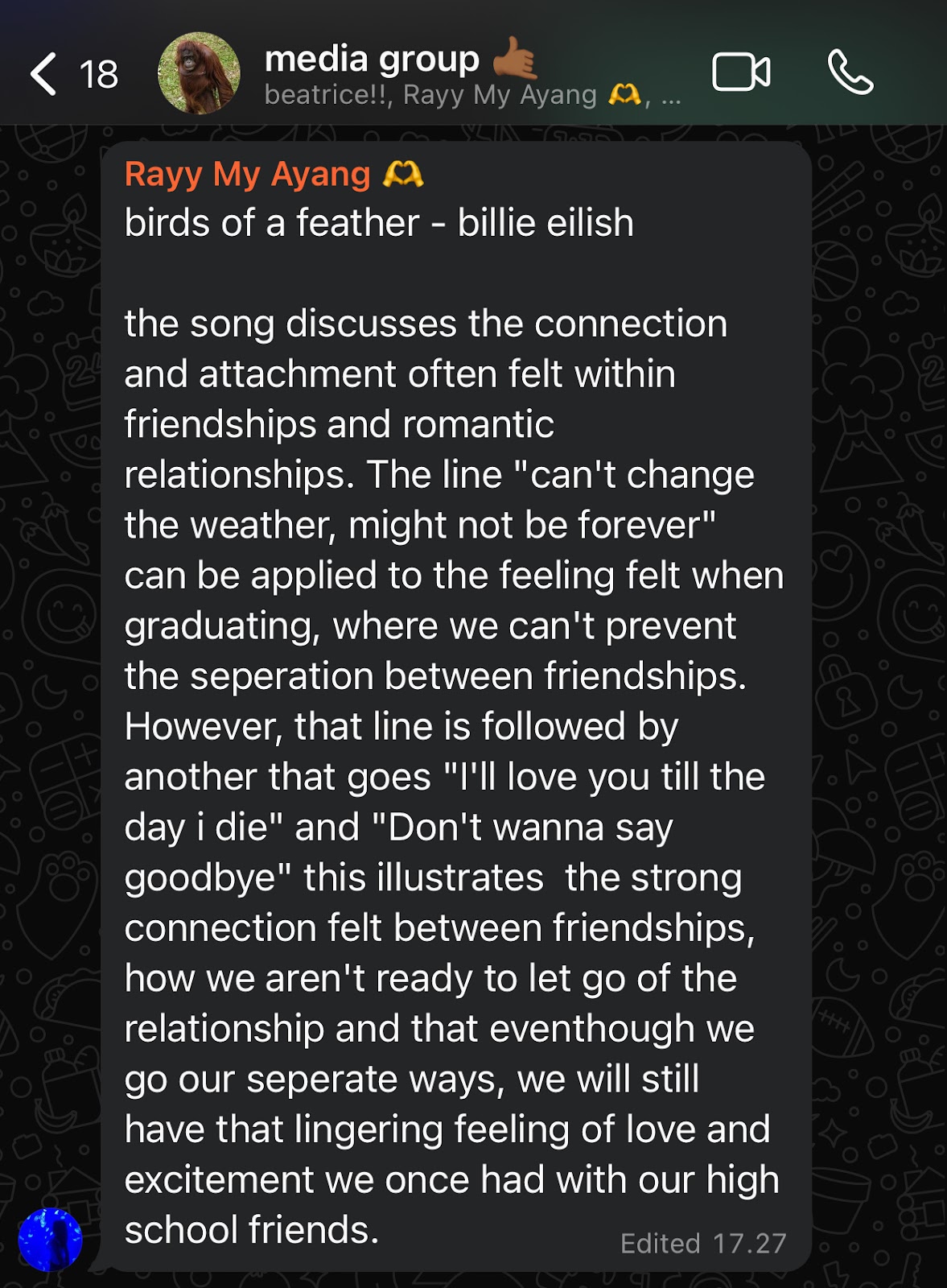
We discussed which song to pick before the project through a communication app called WhatsApp. Here is what my teammate, Rachelle, came up with for the concept of the music video using this song:
How we will differentiate our music video:
The original music video was mainly symbolic and described the song lyrics with visuals in which audiences could see to find deeper connotations in. In our music video, we are looking to subvert this and instead be a bit more illustrative with our visualizations of the song’s lyrics. We will do this because we want the audience to be able to derive a solid dominant reading from watching the music video. We would also like our music video to be more saturated and warm compared to the original music video which has a cool color grading. We want to be able to visualize the fleeting moments of childhood friendship by using multiple locations, showing that days are passing by. This subverts the original music video, which only uses a single location for the setting of the entire music video. 
Reflection : Since we wanted our music video to revolves around themes of friendship, we initially found it difficult to choose between 'Glue Song' by Beabadoobee and 'BIRDS OF A FEATHER' by Billie Eilish. Therefore, we decided to discuss as a team, to see which would better suit our vision. 

As seen above, my teammate (Rachelle) and I explored various ways we could portray the music video to fit specific lyrics, aiming to shift the theme from romance to friendship. Through this process, we realized that 'BIRDS OF A FEATHER' would likely be a better fit for a friendship-centered storyline, as it doesn’t explicitly lean into a romantic narrative. By contrast, Glue Song, is clearly about romance and love. I think Jasmine did really well on the in-depth research too, as it gave us a deeper understanding of the lyrics. This will be very useful for us to change the original connotations to convey the message we want to express in our version of the song.

Screen Test

 This blog post, written by me (Beatrice), features the screen test for our music video project in order to determine the actors/actresses that best fit our concept. This selection was done with the participation of our entire media class.


Here is the link to the class's screen test in case the video does not load → Class Screen Test

By doing this screen test, there are some advantages and disadvantages. On the plus side, it was highly efficient; testing everyone at once allowed us to save time and review a large number of candidates within just one song. This approach also enabled direct comparisons between candidates, as we could observe them side by side, assessing their on-screen presence, body language, and facial expressions to determine who could best embody the star persona we envision. Additionally, this screen test allows us to see how candidates interact with each other, which is important given our music video's focus on themes of friendship. It helped us identify pairs who visually and energetically complement each other on screen. However, there were some disadvantages, such as, candidates might unintentionally adjust their style and tone to align with others, leading to less authentic performances and potentially masking their unique qualities. There’s also the risk of unequal attention when there are many candidates, which can result in varying screen time and limit some candidates’ ability to showcase their full potential. Lastly, it feels less polished due to a more cluttered, chaotic atmosphere, compared to the focused environment of individual screen tests.

Since we wanted to cast stars who naturally convey a strong sense of friendship, we chose Jasmine (the actress wearing the penguin hat) and Rachelle (the actress to her left), both of whom are also my teammates in this project. After reviewing the screen test, we noticed that they both appeared energetic and shared a connection, making them a perfect match for our music video. Their dynamic aligns with the personality and representation we want to portray. We decided to feature two actresses to enhance the sense of synergy within the video, reinforcing the themes of friendship and shared experiences. To ensure the best on-screen chemistry, we conducted an additional screen test (both individually and together) to analyze their screen presence and star persona. This helped us evaluate how they perform separately and how their energy shifts when interacting, which allows them to refine their roles in the final production.

Here are the new screen tests we have conducted, this screen test is recorded and edited by me (Beatrice) : 


Here is the link to the new screen test in case the video does not load → Jas and Ray's Screen Test

After conducting this screen test, we liked the way Jasmine and Rachelle’s energy complemented each other on screen. Jasmine has a more cheerful and expressive presence, while Rachelle appears more reserved. This portrayal aligns well with contemporary representations of friendship, which makes it highly relatable for our target audience. It also strengthens the authenticity of our star persona, as the contrasting yet complementary personalities create a natural synergy. Given this, we believe that Jasmine and Rachelle are the ideal choices for our music video, as their dynamic successfully conveys the connection and shared experiences (high school life) that we aim to represent.

Reflection : While I recognize the importance of this screen test in helping us identify potential actors or actresses who would best suit our music video, the process had its challenges. Initially, we aimed to select a well-known song for the screen test that everyone would be familiar with. However, I didn’t know the chosen song at all, so the screen test ended up being my first time hearing it. This made the experience feel very awkward, as I didn’t know the lyrics or rhythm, and navigating the performance was new for me. Additionally, my team and I realized that this initial screen test wasn’t quite sufficient in determining the right fit for our music video. Therefore, we decided to conduct a second, individual screen test to find the person who best embodies our star’s persona. After conducting additional screen tests with my teammates, we decided that my teammates, Jasmine and Rachelle would be the most suitable choices for the lead roles in our music video. As they are both directly involved in the project, they have a strong understanding of the narrative we aim to convey. Given that the music video centers around a 'friendship' theme, it is important that the on-screen chemistry feels natural and authentic. Casting real-life best friends enhances this authenticity and ensures that their interactions do not appear forced or awkward during the production process of this project. Since Jasmine and Rachelle have been close friends for a long time, we believe their dynamic will effectively bring our vision to life.

Lyric Sheet and Storyboard

This blog post, written by me (Beatrice) contains the planning and storyboard of our music video, as well as the updates / changes and the decisions we made regarding them.

LYRIC SHEET (done as a team)


To begin, my teammates and I decided to start working on the lyrics sheet. I find this to be incredibly helpful as it helps us to visualize the potential scenes for each line of the song. We also discussed possible actions for each scene, how we envision the editing style, and any additional scenes we might include to add narrative context. Additionally, we explored ways to effectively convey our interpretation of the song’s message, aiming for the audience to clearly understand each scene’s connotations in relation to the lyrics.

Reflection : Since much of our discussion was in person, we didn't annotate much in the lyric sheet, which I now worry might lead to some confusion in the future. I also think there were additional details could've been included more, such as the camera angles and edit types. However, I believe these aspects will be added in the storyboard, so it's not a major issue. Moreover, communicating directly allowed us to complete the annotations faster than expected, which was a definite advantage. 

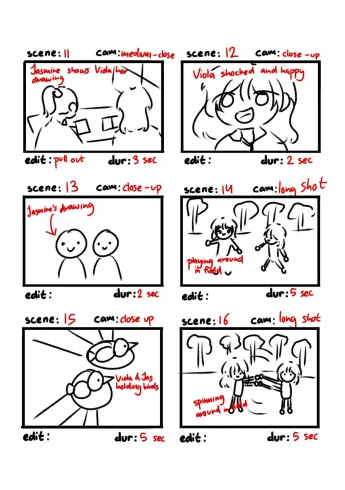
STORYBOARD (made by Rachelle)


Reflection : This storyboard has been incredibly helpful for our project. Since we didn’t add extensive annotations on the lyrics sheet, the storyboard provides a more detailed and organized view, ensuring we won’t forget any key elements. I personally think this storyboard is amazing as it truly captures our vision. I’m especially pleased with scene 5.1, as it perfectly represents the idea I had in mind. However, reflecting on the storyboard, scene 1.1 will likely be our biggest challenge to film since it involves capturing a group of birds flying together, which is something that isn’t easy to control and it rarely occurs. Due to this, we may need to find an alternative for this scene, or if we’re lucky enough to spot it, we’ll need to capture it precisely, as it’s not something we can easily replicate. Using this storyboard will make the filming process much faster and more efficient, as it already details the duration, camera angles, and movements needed for each scene. While I wish I could have been more involved in the process of making this storyboard, I wasn’t really able to, as it seems that Jasmine and Rachelle already had a clear, shared vision for each scene’s look beforehand.

Since our vision evolved constantly throughout the filming process, Rachelle decided to develop a new storyboard to better align with our revised ideas.


Reflection : Since this storyboard was created after the filming process, i feel like there are only little use of this storyboard. Since there are a lot of scenes that needed to be drawn, I think it's better if we all helped to make the storyboard as a team next time so we can finish it quickly and communicate face to face to make sure that we're able to share our ideas right before filming and prevent misunderstandings. This would have allowed us to finalize our visual direction before filming, ensuring clearer communication and reducing the need for spontaneous decision-making. A well-planned storyboard provides a structured narrative to follow, which could have helped to save us a lot of time during the production process.  Despite this, I think Rachelle did an amazing job in drawing the storyboard, as it is easy to understand, and and maintain a simplicity and neatness.

Moodboard

 This blog post, written by me (Beatrice) features the development of our music video's mood board, which allows us to determine the aesthetic direction we envision. These mood boards provides an overview of the colour themes, locations, vibes, and scenery that we aim to feature in our music video. As a team, we brainstormed ideas, shared our thoughts, and researched while compiling several images that reflect our concept. The final collages were put together by me.


Here is the link to canva incase the image wont load → 'BIRDS OF A FEATHER' moodboard

Through this mood board, it clearly conveys that the type of music video we want to create will have a cheerful, fun, and energetic vibe. With both actresses being female, we plan to incorporate activities that typically appeal to teenage girls / young women, showing how the world looks from a female perspective. We're also planning on including some high school scenes, as our theme centers around friendship, which is something that resonates with many young people. These scenes are incorporated to engage our audience by reflecting activities they might enjoy or relate to in real life Activities like sitting at the back of the class chatting about shared interests, studying, traveling, and taking photos together, are all activities that we believe teenage girls will highly associate with. Furthermore, the beginning scenes will feature warmer colour tones as it connotes the warmth of friendship. However, towards the end, we'll gradually shift to cooler colour tones to reflect the bittersweet feelings that come with parting ways, as the narrative follows friends who are preparing to graduate and go their separate paths. As seen in the mood board, we decided to film in different locations, such as field, school, and beach, to provide larger varieties of scenes to keep the visuals fresh and engaging, ensuring the music video remains interesting rather than repetitive.

Reflection : Creating this mood board has honestly been my favorite part of the project so far. We spent time browsing through Pinterest; an app where we got all of these images from, and not only was it enjoyable, but it’s also been invaluable to our team. The mood board has brought us all onto the same page with the creative decisions we’ll be making together. It also helped us align on aspects like colour themes, compositions, and the overall vibe, which are elements that words alone wouldn’t fully convey. This clarity also contributed to our choice of location options for filming. Additionally, the mood board helps to keeps us on track with the aesthetic and shared vision throughout the production process. This will hopeful ensure the consistency in our approach.

Theory of Stardom ; Richard Dyer

 This blog post shows what we (my teammates and I) have learned in class regarding Richard Dyer's Star Theory.

"Stars are constructed personas designed to appeal to audiences."

WEEK 4 - REEL AND REAL PERSONA (Stardom Theory) - Classwork

Names:

Jasmine, Rachelle, Beatrice

Celebrity:

Camila Cabello


Classwork : Theory of Stardom (blog’s title)

REEL persona:

What image to they project through their work (films, music, social media)

  • Camilla Cabello portrays herself as a seductive and iconic figure. She is always confident and is a feminist. 

REAL persona:

Have there been any cracks in this image (examples)

  • Camilla had a picture of her in a bikini taken by the paparazzi where she doesn’t look ‘ideal’, she then went on social media and expressed her upsetness to the public. Audiences then discussed how Camilla was being insecure and how she isn’t as seductive as she portrays herself to be. 

Love:

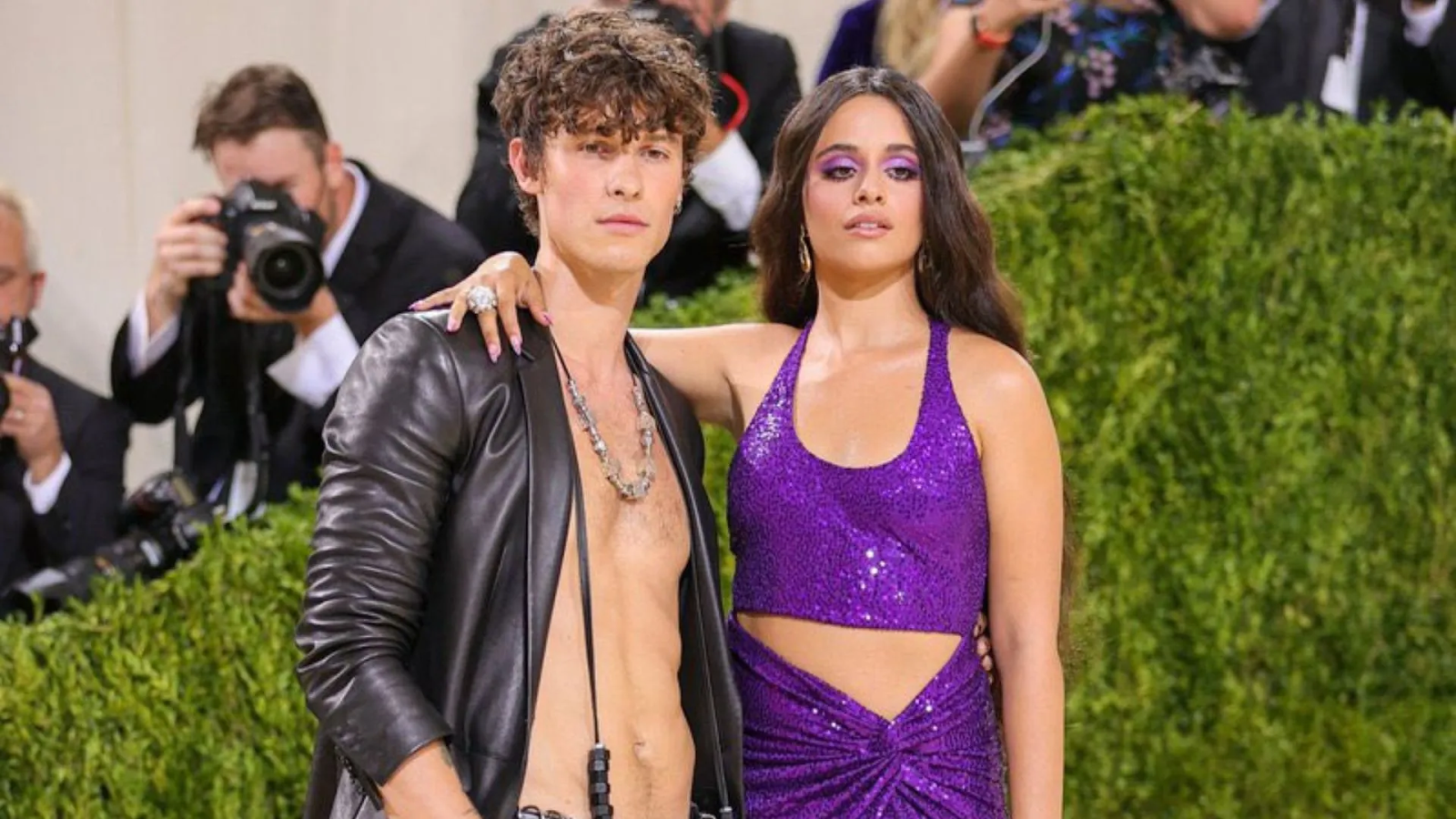
Shawn Mendez, as she is infamous for being his muse. She kept on breaking up and getting back with him. She dated Shawn Mendez from 2019 - 2021, and eventually announced their breakup through instagram as “the best of friends”.


Website link : Camila Cabello's love life

Ordinariness:

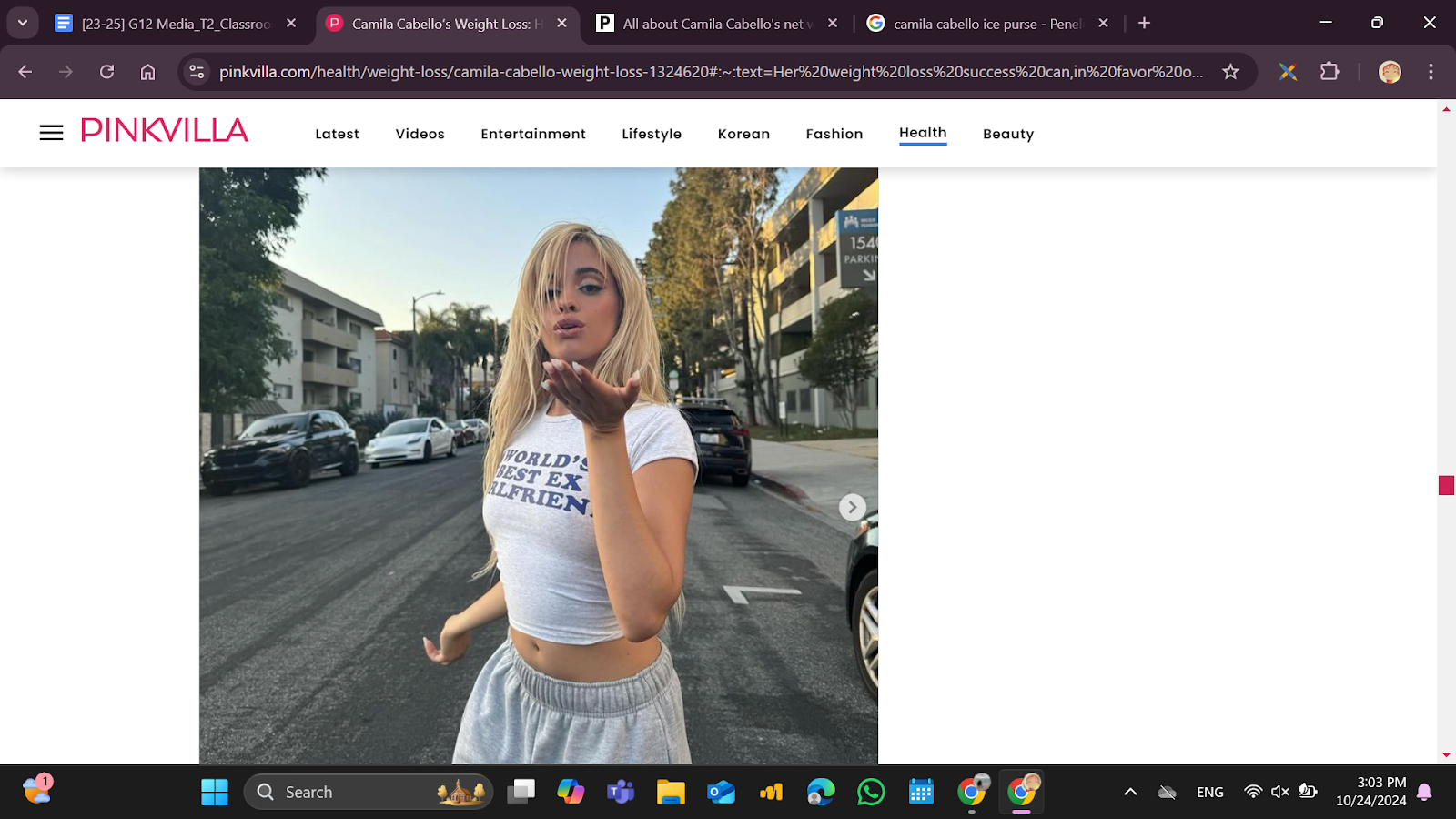
Camila Cabello posted on her instagram using her ‘daily outfit’ which resonates with a lot of the audience. 


Moreover, she occasionally posted her working out on her social media. By her speaking openly about her body image, and the societal pressures she feels to look a certain way, it resonates with the audience who face similar difficulties, especially in a world influenced by beauty standards. Through her experiences, she has also been vocal about the unrealistic beauty standards often imposed on women, especially in the entertainment industry. Additionally, by showing the ‘imperfect’ side for her, it invites empathy and respect from the audience, which strengthen her image of an “ordinary” person rather than as someone with an achievable lifestyle.


pinkvilla - ordinary

Success:

What is their success story? How is it told?

  •  At first, Camilla Cabello was in a group called Fifth Harmony where she often got comments that said her voice is so different (unique) compared to her other group members that it overshadows everyone else. Due to this, Camilla Cabello quit the group to pursue a solo singing career. She began to release a few collaborative singles like "I Know What You Did Last Summer" with Shawn Mendes which peaked at number four on the US Billboard Hot 100. Her solo career has been peaking ever since. 


Camila's success story 

Consumption:

Luxurious lifestyles:


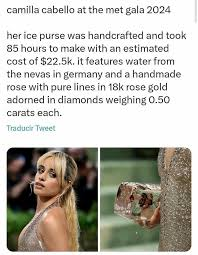
She has been seen to consume products such as this ice-handbag which costs $22.5k. This proves that she has enough funds in order to support this kind of spending, allowing her to purchase products which are generally seen as a waste by the public. In addition, this handbag caused quite a backlash as people on platforms such as Tik-tok have been seen making posts about her, calling her out for the useless purchase of this handbag which will melt anyways, not being worth $22.5k.

Dream turned sour:

Has this celebrity had a downfall? How is it reported? Did they recover?

  • An anonymous twitter account posted screenshots of Camilla Cabello’s old tumblr and twitter posts which consists of her re-shared gifs and memes that reinforce black and asian stereotypes. She later on apologized formally on her Instagram story and was later on reported to require going to therapy to stop being racist. 


Sources: https://www.teenvogue.com/story/camila-cabello-weekly-racial-healing-sessions 

https://www.cbsnews.com/news/camila-cabello-tumblr-language-in-posts-singer-apologizes-for-n-word-racial-stereotypes-2019-12-19/  


Reflection : I think this classwork has been incredibly useful as it deepens our understanding of this theory. By understanding its concepts, we can create a music video that resonates with our target audience by effectively using the artist’s personality and public image. Balancing the "real" and "reel" personas allows us to build authenticity and relatability while crafting a distinct style for the artist that appeals to a broader audience, which also helps to establish a memorable and recognizable identity.  Overall, this theory guides us in shaping a captivating star image that resonates with audiences on a deeper level, enhancing the emotional impact, narrative, and appeal of our music video to make it more memorable and impactful.